Water softeners in Mequon, WI
Water softeners for Mequon, where most homes pump their own water
The 8 grains quoted for Mequon describes the city utility's lake water, which roughly eleven thousand people use. Most of the city draws from private wells that have no published number at all. So every quote here starts with one question: which water is yours?
Mon to Fri, 7am to 5pm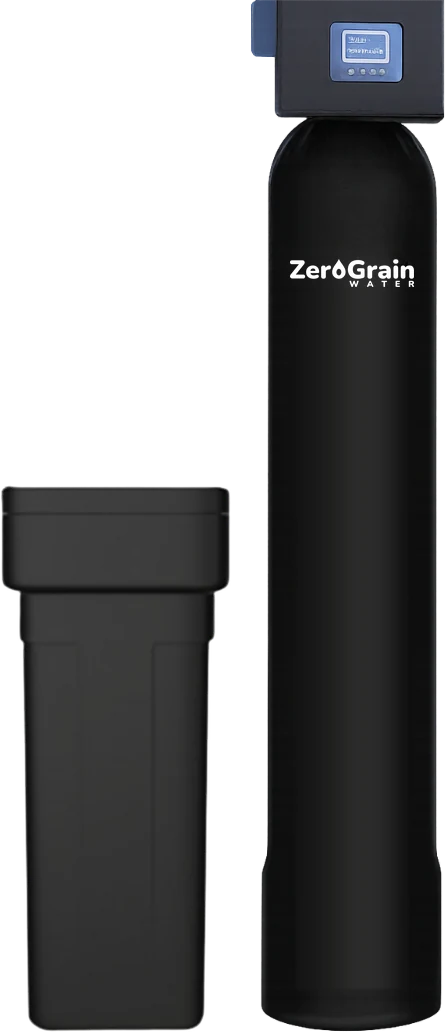
What is included
- One whole-house softener with the brine tank that recharges it, sized to your well or to the utility's 8 grains
- A reverse-osmosis drinking faucet on the kitchen sink, which rides along with every whole-house softener and is never sold alone
- Installation done by a contractor who holds a Wisconsin plumbing license
- Hardness measured ahead of any plumbing work, then again at your faucet until the test shows zero
- One price, said out loud on the call; no salesperson ever visits
- Phone quotes on weekdays, from 7am until 5pm
Mequon water hardness
Source: Mequon Water Utility; North Shore Water Commission; Milwaukee Water Works; Urban Milwaukee, September 2023
Get your price
Send your details and we will call you with one price. Nobody comes to the house to sell you anything.
Mequon has two kinds of water, and only one is published
The Mequon Water Utility treats none of its own water. It buys finished Lake Michigan water from Milwaukee Water Works and the North Shore Water Commission and resells it. Those two suppliers put the hardness near 137 milligrams per liter, which divides out to about 8 grains per gallon.
That figure covers roughly eleven thousand people in a city of 25,257. Urban Milwaukee reported in 2023 that most Mequon residents still draw from wells of their own, and no one publishes a hardness number for a private well. For those houses, the number has to come from the house.
On the utility's lake water: the milder case
If your water bill comes from the Mequon Water Utility, the 8 grains is yours. On the USGS scale, 137 milligrams per liter lands in the hard band, which runs from 121 to 180, nearer its low end than its high end.
That is a modest number, and the call treats it as one. We explain what the figure means and quote a softener if you want one. Whether softening water at that level is worth it to you is your decision, not ours.
On a private well: your lab report is the starting line
A Mequon well pulls Ozaukee County groundwater out of carbonate rock, and its hardness and iron can change from one lot to the next, not only from one side of the city to the other. A neighbor's result is a hint about your water, not a measurement of it.
Read us whatever lab results you have. If you have none, say so: the water is tested before any work begins either way, and the job is not finished until your tap reads zero hardness.
One limit to know up front. A softener is not built to treat bacteria or nitrate, and the Wisconsin DNR's standing advice is a bacteria test on any private well every year at minimum, softener or not.
What we ask on the phone
Quotes happen over the phone, weekdays from 7am until 5pm, and the questions are short. Lake water or a well? How many people are in the household? Where does water enter the house, and is an old softener parked there?
You leave that call with one price. No salesperson follows up with a visit; the plumbing contractor, on installation day, is the first person to come to your door.
Who does the hands-on work
Our side is choosing the size and supplying the equipment. The hands-on part belongs to a Wisconsin plumbing contractor, licensed by the state, because the softener's discharge line ends just above a drain, leaving an air gap, and chapter 145 of the Wisconsin Statutes calls that connection plumbing.
On that day any old softener is disconnected and carried out, the new resin and brine tanks are stood in its place, the bypass valve is tied in, and a reverse-osmosis faucet is mounted on the kitchen sink. Then your water gets its second test.
Thiensville, River Hills and the rest of Mequon
This site serves Mequon, which the state's 2026 estimate puts at 25,257 people, along with its neighbors Thiensville and River Hills. River Hills has 1,582 residents in that same estimate.
The one published figure on these pages is the Mequon Water Utility's. A home in Thiensville or River Hills starts from whoever supplies its water, or from its own well, and the call works from there.
Lake water and well water, side by side
Utility water in Mequon is Lake Michigan water that two suppliers have already treated, sold to the city utility and passed on to its customers. Every customer gets the same published hardness, roughly 137 milligrams per liter.
Well water is a different thing entirely. It comes up from the carbonate rock under your own lot, nobody reports on it, and what it carries can change from one property to the next. One kind of water arrives with a number attached; the other has to be measured before anyone can size a softener for it.
A Mequon kitchen's drinking-water faucet, well house or utility house
Every whole-house softener for a Mequon home comes with a reverse-osmosis faucet mounted on the kitchen sink for drinking water. The well house and the utility house get the same one, and it is included in the single price the call gives you.
It is never sold apart from the softener. On the utility's lake water, at about 8 grains, that is worth knowing going in: the faucet belongs to the softener decision rather than to a decision of its own.
The plumbing contractor fits it at the kitchen sink on installation day, during the same visit as the resin and brine tanks, so the drinking-water side needs no second appointment. That makes the day a two-room job: the tanks go where the water enters the house, and the faucet goes on the sink.
Sizing a Mequon softener when the house holds the only number
For most Mequon homes the match starts without a published figure. The utility's 8 grains describes the roughly eleven thousand people it serves; a house on its own well brings its own number, from a lab report or from the plumber's first reading at the tap.
That is why one citywide number cannot carry a Mequon quote. A single figure would describe the utility's customers and say nothing about the larger group on wells, in a city where well hardness and iron change from one lot to the next.
Two other answers count in every Mequon house. The head count matters alongside the hardness, since a family of five and a couple with the same hardness are not the same job. And the spot where water comes into the house decides where the tanks stand, close to a drain and an outlet.
An old softener in a Mequon house shows where the equipment already fits, not what the new one should be set to. Whatever number it was set from, the new setting is taken from your tap on installation day, and that tap is retested until it reads zero.
None of it needs a visit before the price. The lab sheet or the word well, the head count and the layout you describe are what the call works from.
Mequon's utility past the city line, in Thiensville and River Hills
The utility's water reaches beyond Mequon itself. Connected Thiensville addresses are on the Mequon Water Utility, while the rest of that village draws from well co-ops or private wells.
River Hills is the newer case. Urban Milwaukee's September 2023 report on the utility covered its expansion into River Hills, and most of River Hills is still on private wells.
So the opening question on a Thiensville or River Hills call is the Mequon question: is this address connected, or does its water come from a well? A connected home starts from the roughly 137 milligrams per liter the utility's suppliers publish; a co-op well or a private well starts from its own lab results. The package and the single price are the same as in Mequon.
Common questions
Is Mequon water hard?
Depends which Mequon water. The utility's purchased lake water runs about 137 milligrams per liter, roughly 8 grains, at the low end of hard on the USGS scale. A private well has no published figure; its hardness is whatever a test of that well shows.
How do I know if my house is on a well?
If you pay a water bill to the Mequon Water Utility, you are on its lake water. If you do not, your house most likely has its own well, which puts you in the larger group. Unsure? Mention it when you call, along with the street address.
Will a softener deal with bacteria or nitrate in my well?
No. A softener's one trade is hardness for sodium, or for potassium when potassium chloride replaces the salt. Bacteria and nitrate call for a lab test, and the DNR's advice is a bacteria test at least yearly.
My well has iron. Does that matter for the quote?
Mention it. Wells can carry iron along with hardness, and an iron reading belongs on the call with your other numbers. We will tell you plainly what the quote covers.
Can I buy only the drinking-water tap for utility water?
No. Reverse osmosis comes only as part of a whole-house softener here, with its faucet on the kitchen sink; it is not a product on its own.
Does the Mequon Water Utility treat its own water?
No. It buys water that Milwaukee Water Works and the North Shore Water Commission have already treated, and resells it to its customers.
Do you cover Thiensville and River Hills?
Yes. Tell us the supplier, or that you have a well, and the quote starts there.
Will my Mequon well read like Cedarburg's water?
Not necessarily. Mequon wells draw Ozaukee County groundwater from the same carbonate rock Cedarburg's municipal wells pump, but on a private well hardness and iron vary house by house. Only a test of your own well, or the plumber's first reading at your tap, gives your number.
Does it matter which supplier my utility water comes from?
Not for the hardness. The Mequon Water Utility buys from Milwaukee Water Works and the North Shore Water Commission, and both publish roughly 137 milligrams per liter, about 8 grains. That is the figure a utility home's quote starts from either way.